CLT Fixer
We rebuilt customer acquisition for an appliance repair service in Charlotte, connecting Google Ads, a new website, service areas and actual sales. The first full month after relaunch brought more than 40 inquiries, around 20 paid jobs and over $7,000 in revenue on $2,500 in ad spend.
- Period
- 2026
- Market
- Charlotte, North Carolina, USA
- Scope
- Website and paid search
- Stack
- WordPress, Elementor, Google Ads, call tracking
- Inquiries in the first full month
- 40+
- Paid repair jobs
- ≈20
- Revenue in the first full month
- >$7,000
- Monthly ad spend
- $2,500
The client and the starting point
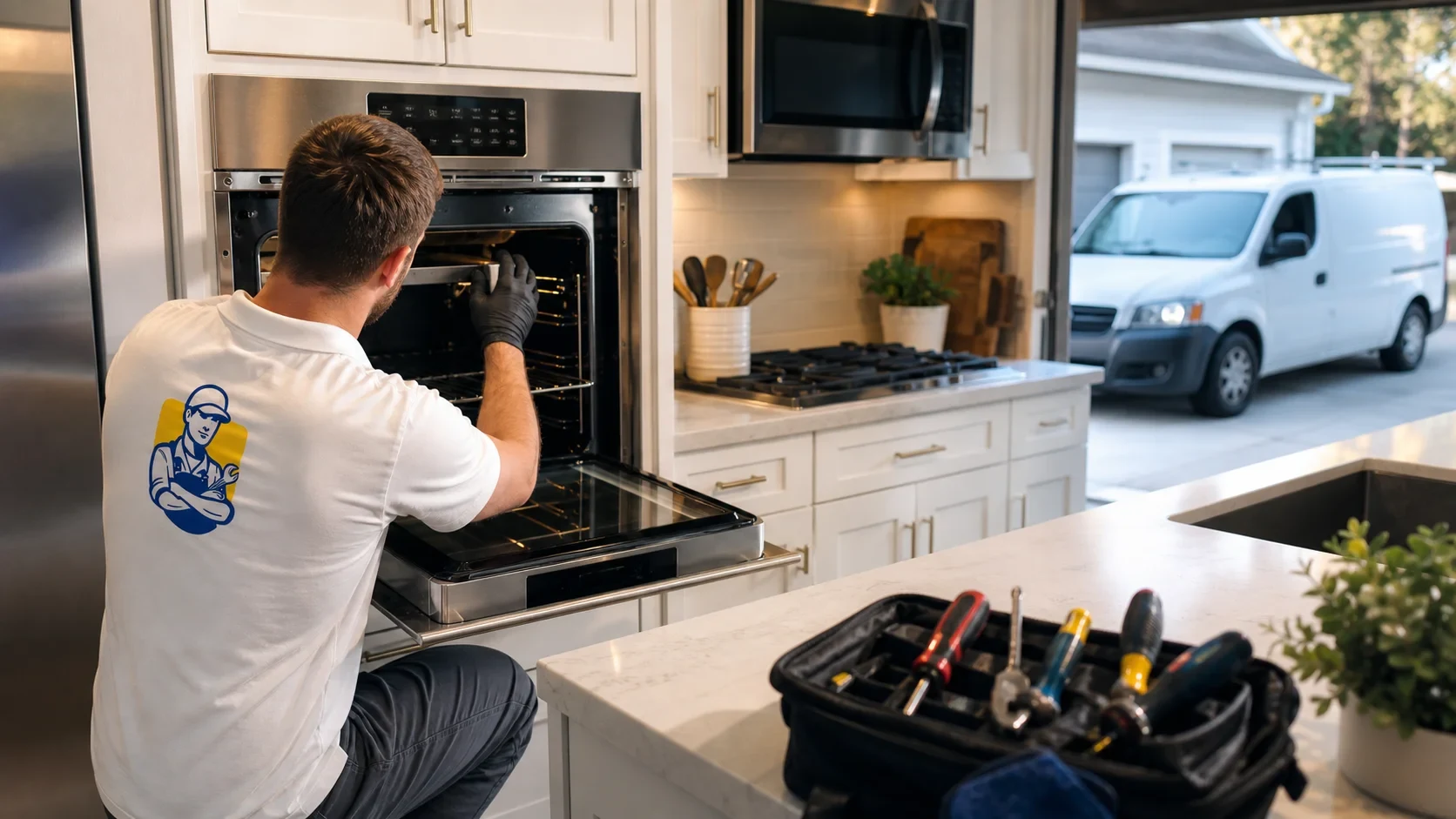
CLT Fixer repairs refrigerators, washers, dryers, dishwashers and ovens in Charlotte, North Carolina. Customers need a nearby technician, clear terms and a quick response.
Before this project, the company had spent roughly $7,000 on Google Ads without a predictable flow of jobs. Campaigns sent different queries and locations to a single landing page, and the client had lost confidence in the channel.
Advertising without a working system
The budget had been spent, but the business had no predictable job flow and no connection between advertising and sales.
- $7,000
- spent on Google Ads before the project
- 1
- generic landing page for different services and locations
- 0
- connected reports for inquiries and sales
Why advertising was not producing results
Our audit followed the whole journey from search to a paid repair, not just the settings inside the ad account. We found five connected problems.
- Ad coverage did not match the area the technicians could actually serve.
- Campaigns mixed appliance types, urgency levels and customer intent.
- Some spend went to irrelevant Display and YouTube placements.
- One generic landing page could not answer each specific search.
- Forms, calls, inquiry quality and sales were not connected in reporting.
What the audit uncovered
Five connected issues affected the entire journey from search to a booked repair.
- 01Ad coverage did not match the actual service area.
- 02Appliance type, urgency and customer intent were mixed together.
- 03Part of the budget went to low-quality Display and YouTube traffic.
- 04One generic landing page answered every type of search.
- 05Forms, calls and sales were not connected in reporting.
Connecting search, the website and sales
We connected commercial searches, relevant ads, matching pages, inquiries and paid jobs. Google Tag Manager, Google Analytics and call tracking made forms and calls visible in one workflow.
The goal was useful business inquiries. A call from outside the service area, or for a repair the company does not offer, was not treated as a successful outcome.
Connected a search with a paid job
Google Tag Manager, Google Analytics and call tracking made forms and calls part of one measurable funnel.
- 01DemandCommercial search
- 02Google AdsRelevant ad
- 03PageService and location
- 04InquiryForm or call
- 05SalePaid job
From one landing page to a scalable website
In roughly a week and a half, we rebuilt the website in WordPress and Elementor. A single page became a structure covering eight repair categories, around 15 appliance brands and priority service areas.
We added symptom and fault pages, reviews, technician profiles and real project photos. A refrigerator repair search now led to a refrigerator repair page, not a generic list of services.
One landing page became an infrastructure
Each commercial search received a relevant page by service, appliance brand or service area.
- 8
- repair categories
- ≈15
- appliance brands
- Local
- priority areas around Charlotte
A homepage built around booking a repair
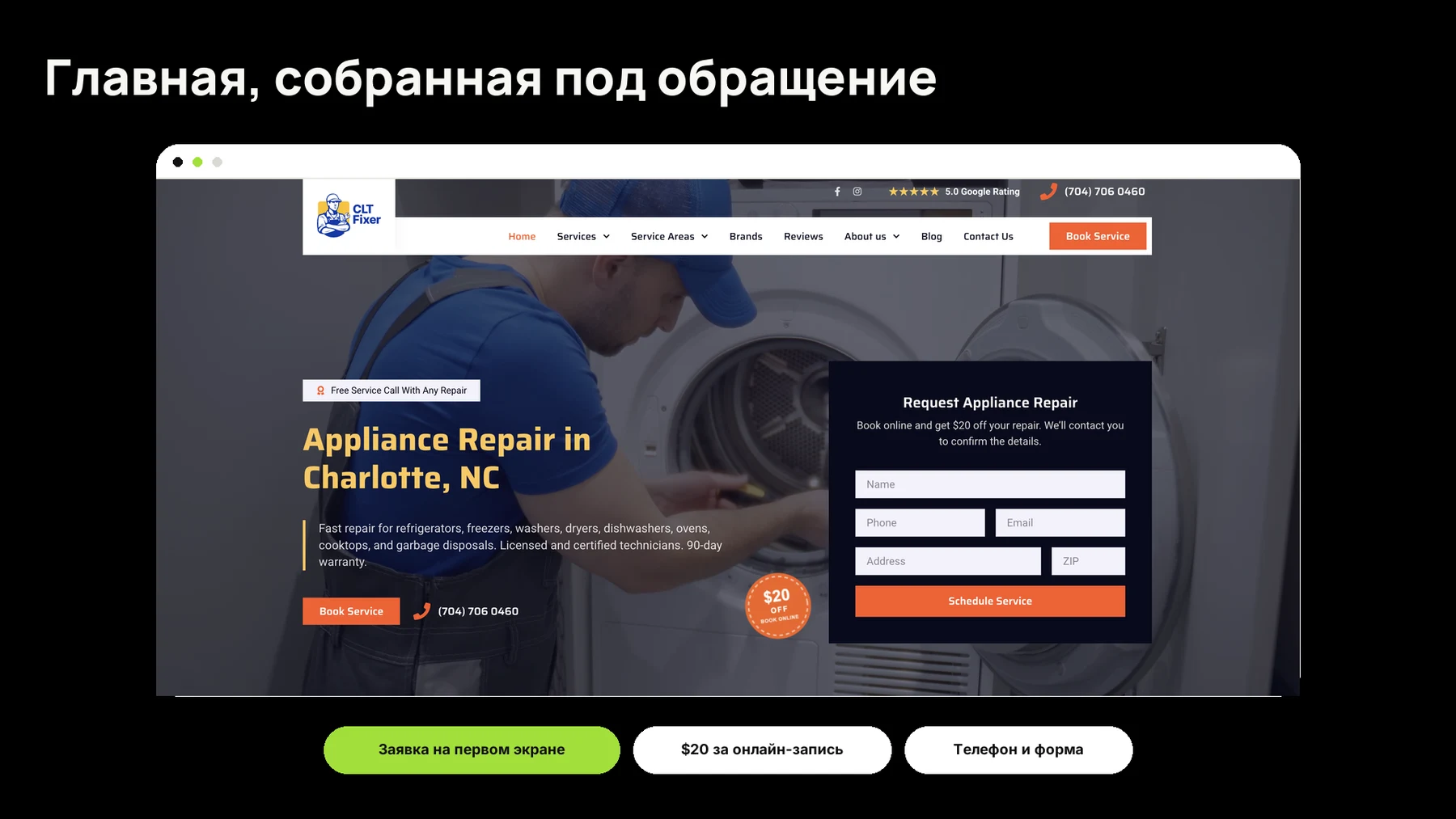
The first screen established appliance repair in Charlotte, with a booking form and phone number. Supporting reasons to book included a quick callback, a $20 online-booking discount and a 90-day warranty.
Google reviews, real work photos and technician profiles supported trust. Booking prompts appeared again after visitors had received the information they needed.
The homepage leads to booking
The service, phone number and form are visible immediately. Real work, reviews and a warranty support trust.
Building the SEO foundation into the website
Headings, metadata, service and area pages, internal links and the first informational articles were part of the build. This created a foundation for future organic growth.
A full off-site SEO program, including directory and backlink development, was outside this phase. The first-month results relate to the website and Google Ads relaunch.
SEO built into the structure
The technical and content foundation was built during the website relaunch, before a separate off-site SEO program.
Headings and metadata
Service and location pages
Internal linking
Fault and symptom pages
First informational articles
Campaigns organized around local repair intent
We started with northern Charlotte and nearby areas where technicians could respond quickly. Demand was segmented by appliance, location and intent: near me, same-day and emergency repair.
Negative keywords excluded spare-parts shopping, DIY repair and instruction searches. Very small segments were combined to provide enough learning data, while priority areas remained distinct.
Historical customer data provided a first-party audience signal. Search became the primary inquiry source. Performance Max and Maps did not deliver the required mix of quality and volume in this phase, so their budget moved to Search.
Search was organized by real intent
Small segments were combined to retain enough learning data, while priority locations and services stayed distinct.
Appliance
Refrigerators, washers, dryers, dishwashers and ovens.
Location
Northern Charlotte and areas where a technician can respond quickly.
Intent
Near me, same-day, emergency repair.
Creative tailored to each service area
Square and landscape creatives named the service area and communicated concrete benefits: same-day service, a quick callback, online booking, the discount and warranty.
Light compositions performed better than dark ones in the initial tests. We selected variants using their results, not visual preference alone.
Creative matched local demand
The light composition performed better in early tests. Variants were selected by results, not visual preference.
Davidson
Same-day repair and a callback within 15 minutes.
Cornelius
A local message for a distinct service area.
Offer
$20 off online booking and a 90-day repair warranty.
The first full month after relaunch
On $2,500 in ad spend, the business received more than 40 advertising inquiries and around 20 paid jobs. Revenue exceeded $7,000, with an average order value above $350. Advertising spend per sale was approximately $125.
Revenue was more than 2.8 times ad spend. This is not net profit or ROI: repair costs, team fees and other business expenses are not included in that ratio.
The business now has a foundation for additional services, appliance brands and locations, local SEO and retargeting. Budget decisions can be based on confirmed inquiries and sales.
The first full month
Revenue exceeded 2.8 times ad spend. This is a revenue-to-ad-spend ratio, not net profit or ROI.
Results from the first full month after the website and advertising relaunch. These are project-specific results, not a forecast for another business.