The US customer does not see your digital maturity first
Founders from the CIS often arrive with a strong digital toolkit: focused landing pages, rapid testing, detailed dashboards and a performance mindset. That can be an advantage, but it is not the first thing a local customer evaluates.
A person choosing a nearby contractor, dealership, clinic or professional service is usually reducing risk. They look for a business that serves their area, answers quickly and has visible evidence from people like them. A modern page can support that decision, but it cannot replace the signals that make the company feel established locally.
International lead generation starts with the way a local customer searches, compares and trusts, not with the advertising account.
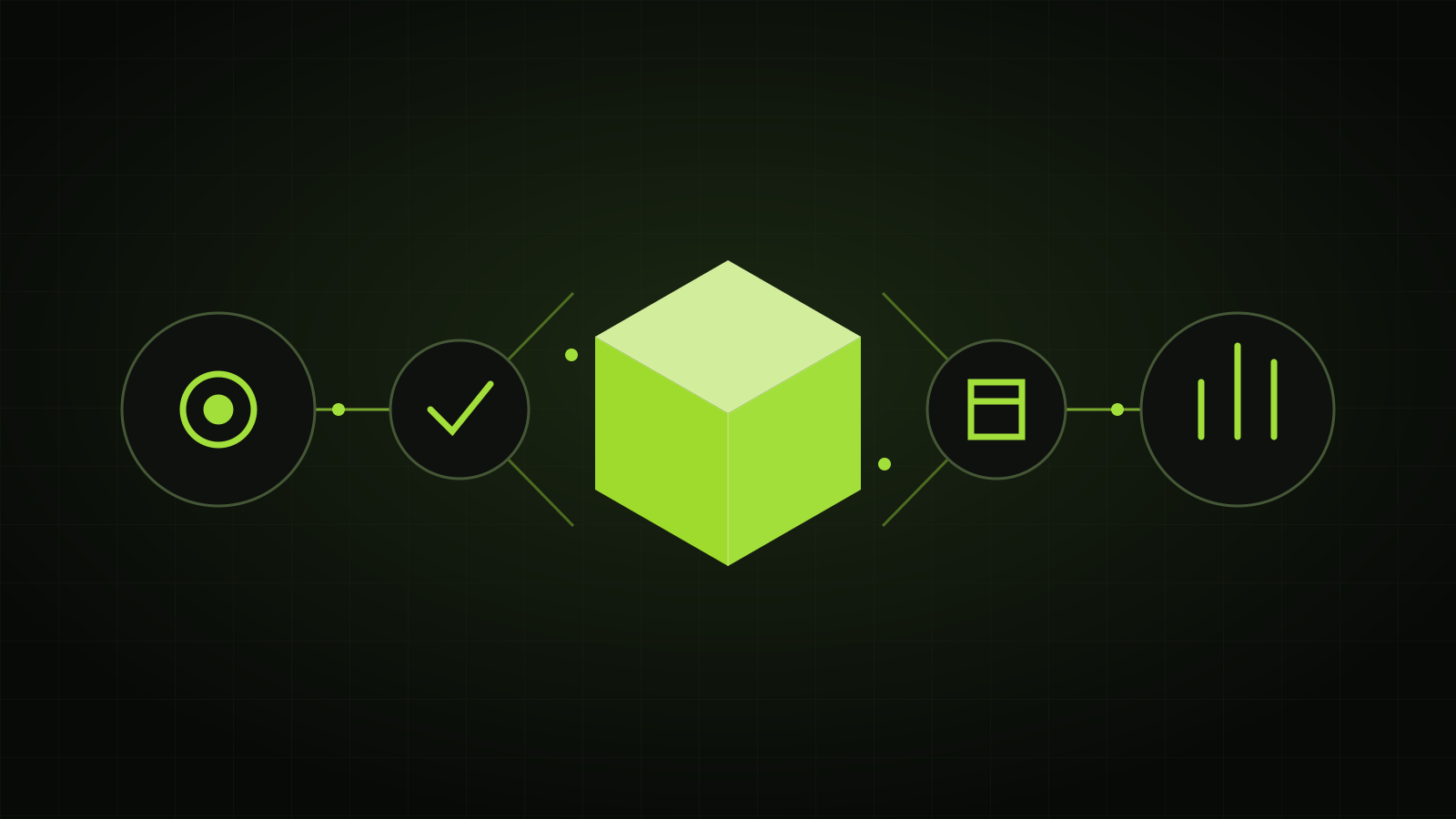
- 01Entry point
One audience, problem and geography.
- 02Local proof
Terms and evidence that feel familiar to the buyer.
- 03Demand test
One channel connected to one focused page.
- 04Learning
Qualified responses change the next release.
- A complete and accurate Google Business Profile when the business is eligible.
- Reviews, recent photos and examples of completed work.
- A local phone number and a clearly stated service area.
- Licenses, insurance or guarantees when the category makes them relevant.
- Natural English copy that explains the offer without translated business jargon.
- A response process that works during the customer's local business hours.
Localize the decision, not only the words
Translation preserves meaning. Localization changes the argument so it fits how the market buys. The difference appears in the headline, proof, pricing language, form fields and the action you ask a visitor to take.
| Layer | Weak adaptation | Useful adaptation |
|---|---|---|
| Offer | A direct translation of the original promise | A specific service, buyer and service area |
| Proof | General statements about expertise | Relevant cases, reviews, photos and operating details |
| Pricing | No context until the sales call | A range, starting point or explanation of what affects cost |
| Contact | One long generic form | The shortest path to a call, estimate or consultation |
| Follow-up | A message whenever the team is online | A response standard aligned with the local time zone |
Choose channels from the buying situation
There is no universal US channel mix. The right starting point depends on urgency, geography, average order value, sales cycle and where buyers already compare providers.
- Google Ads for existing high-intent demand, especially local and time-sensitive services.
- SEO and local SEO for sustained visibility across services, cities and customer questions.
- Meta Ads for visual demand creation, retargeting and offers that benefit from repeated exposure.
- LinkedIn for B2B categories where job title, company and professional context matter.
- Relevant local marketplaces and directories when buyers already use them to compare providers.
- Email and CRM communication for leads who need more time, reminders or repeat service.
A channel belongs in the plan only when the business can explain the audience, the page it will reach and the commercial outcome that will be measured. Adding every available platform usually spreads a limited budget too thin.
Start with a narrow geography and one measurable path
The United States is not one uniform market. Search volume, competition, service expectations and unit economics vary by state, metro area and neighborhood. A controlled launch makes those differences visible before budget grows.
- Select one priority service and the locations the operation can serve well.
- Build a page that matches that service, geography and buying situation.
- Launch the channel with the clearest intent and enough local demand.
- Pass source, campaign and landing-page data into the lead record.
- Record contact, qualification, rejection reason and sale outcome.
- Expand only after the team understands which demand is commercially useful.
This sequence also reveals operational constraints. If calls are missed, estimates take days or the English-speaking team cannot cover the schedule, the bottleneck is not the campaign. Fixing the handoff can create more value than buying additional clicks.
Judge the launch by qualified demand
Cost per lead is useful, but it does not tell you whether the inquiry fits the service area, has the right need or becomes a sales conversation. A cheap lead can still be expensive to process.
| Signal | Question |
|---|---|
| Demand | Which queries, audiences and locations produced inquiries? |
| Quality | How many inquiries matched the service, geography and timing? |
| Handling | How quickly did the team answer and make contact? |
| Economics | What did a qualified lead and sales opportunity cost? |
| Learning | Which objections or rejection reasons require a page or campaign change? |
The goal of the first phase is not maximum reach. It is a repeatable path from local demand to a qualified conversation that the business can serve.
Review the Car2Sell case and its connected search, SEO and lead path