Channels are not a lead generation system
Google Ads, Meta Ads, SEO and email are acquisition tools. None of them can compensate for an unclear offer, a landing page that does not answer the buyer's question or a sales process that loses inquiries.
This is why channel reports can look healthy while revenue remains flat. Click-through rate, cost per click and form volume describe individual steps. A business needs to understand whether the right person became a qualified conversation and, eventually, a customer.
The useful unit of analysis is not the campaign. It is the complete path from demand to a qualified conversation.
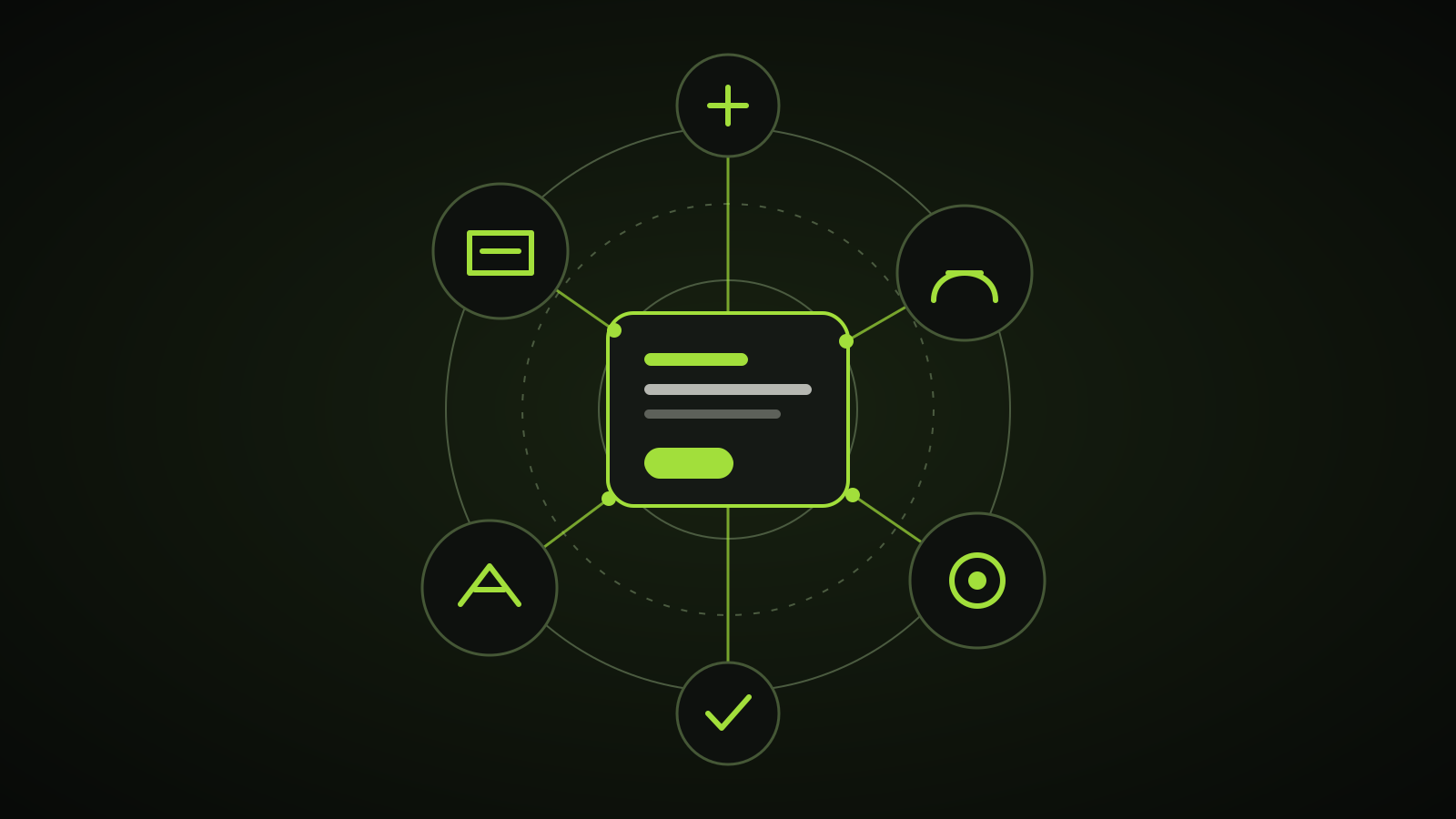
Five layers that have to agree
- Offer and economics: what is being sold, to whom and at what acceptable acquisition cost.
- Demand capture: the channels that can reach people at the right stage.
- Landing experience: the page, proof and next action promised by the ad.
- Measurement: events and definitions shared across advertising, analytics and CRM.
- Lead handling: speed, qualification and follow-up after the inquiry.
Start with the offer and economics
Before choosing a channel, define what a qualified lead is worth and what must be true for that lead to become a sale. The answer does not need to be perfect. It needs to be explicit enough to guide budgets, geography, keywords and conversion goals.
| Decision | What to define | Why it matters |
|---|---|---|
| Target customer | Problem, location, buying context | Prevents broad traffic from becoming the default |
| Commercial threshold | Average order value, margin, close rate | Sets a realistic acquisition range |
| Qualified inquiry | Need, geography, timing, fit | Separates useful demand from raw form volume |
| Sales capacity | Response time and weekly capacity | Keeps media spend aligned with operations |
Connect the customer path before scaling spend
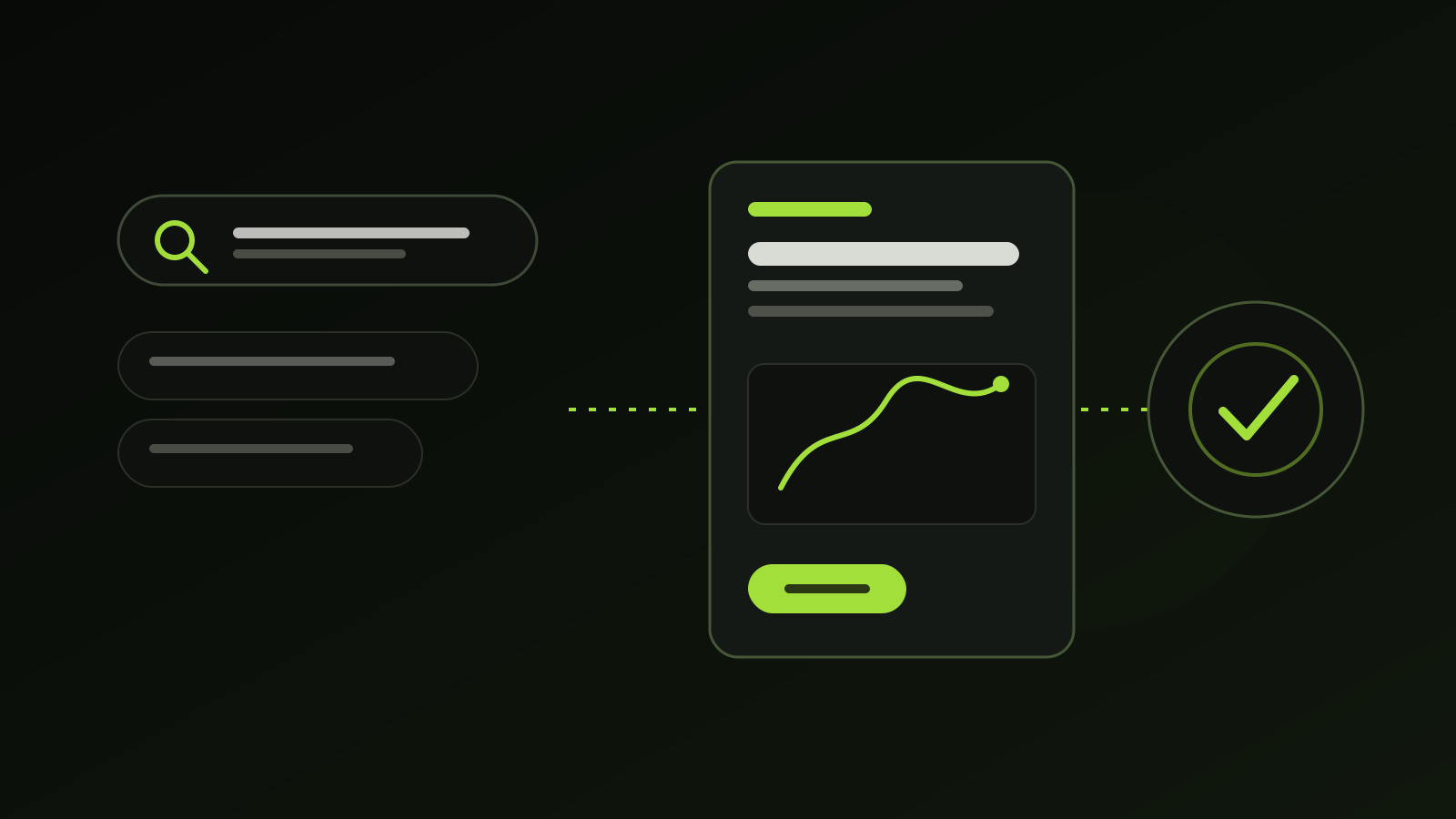
The ad, page and follow-up should feel like one conversation. A search ad built around an urgent local need should open a page that confirms service area, availability, proof and the next step without forcing the visitor to reconstruct the offer.
The same promise then has to continue inside the form and CRM. Source, campaign, landing page and lead status should travel with the inquiry. Without that connection, media teams optimize for the cheapest visible event instead of the best commercial outcome.
A minimum connected path
- Group demand by intent and commercial context.
- Match each group to a focused landing page.
- Track meaningful actions, not every click on the page.
- Send source and campaign data into the lead record.
- Return qualification and sale outcomes to reporting.
Measure lead quality, not only form volume
A lower cost per form is not automatically an improvement. The form may attract the wrong geography, job seekers, price shoppers or requests the team cannot fulfill. Reporting should make these differences visible instead of blending them into one conversion count.
A useful weekly view connects spend, inquiries, qualified leads, sales opportunities and revenue where available. It also records why leads were rejected. Those reasons often reveal the next page, keyword or qualification change faster than another campaign-level chart.
Roll the system out in stages
A connected system does not require launching every channel at once. Start with the highest-intent source and one strong landing path. Establish definitions and feedback. Add channels when the team can see what happens after the inquiry.
- Stage 1: offer, measurement plan and one priority landing page.
- Stage 2: one acquisition channel with controlled geography and intent.
- Stage 3: CRM statuses, response standards and quality feedback.
- Stage 4: additional channels, remarketing, content and lifecycle communication.
This sequence keeps learning legible. It also makes it easier to identify whether a problem belongs to demand, the page, tracking or lead handling before more budget amplifies it.