Car2Sell
Building a connected marketing system for a New Jersey dealership: from audience research and a rebuilt website to advertising, SEO, email and repeat sales.
- Period
- 2023–2026
- Market
- New Jersey, USA
- Scope
- Performance, SEO, communications, web design
- Google Ads leads YoY
- 7x
- SEO visibility growth
- 5.4x
- Average marketing ROI
- +420%
- Monthly leads
- 400–500
The client and the challenge
Car2Sell is a used-car dealership with several New Jersey locations. When the business approached us, its website was outdated and promotions were scattered across disconnected channels.
The goal was to increase website inquiries while reducing reliance on third-party listings. The dealership wanted direct customer relationships, centralized sales and more control over its funnel. Our task covered the entire system, from positioning and the website to advertising and analytics.
Audience and market research
We started with a competitor audit: how other New Jersey dealerships and listing platforms positioned themselves, acquired customers and presented their value. This established the gaps across paid search, paid social, SEO, user experience and supporting marketing channels.
Gaps before the engagement
Channels existed separately instead of working as one manageable funnel.
Google AdsActive without a shared system
Meta AdsFragmented launches
Display advertisingNot in use
SEOMinimal visibility
Mobile experienceErrors and extra steps
Social channelsNo content system
EmailNot launched
Reviews2.9 / 5
What matters to buyers
Interviews with existing buyers helped us understand motivations, fears and decision triggers. We used Jobs To Be Done and buyer-persona work to identify three behavioral segments: immigrants without an SSN or with limited credit history, local families and first-time buyers.
For each group, we mapped barriers, selection criteria and reasons to consider Car2Sell. A customer journey map connected the first thought of buying a car with search, evaluation, financing and an inquiry.
Three buying situations
Segmentation was built around the customer’s real situation, not age or gender.
Immigrant buyer
“Can I buy without an SSN?”Needs clear financing terms and help navigating documents.
Local family
“I want to trade in my current car.”Compares total cost, reliability and the ease of the deal.
First-time buyer
“Will I qualify for financing?”Looks for confidence, a clear process and an accessible first step.
Journey to purchase
Every stage needs its own proof and a clear next step.
- 01Need emerges
- 02Search begins
- 03Dealers compared
- 04Terms checked
- 05Inquiry
- 06Purchase
Turning research into hypotheses
Search queries, forum discussions, competitor comments and sales-team feedback supplied additional evidence. We tested messages about financing without an SSN, a family trade-in and finding a car in one day.
The research produced specific audience segments and relevant offers, rather than a broad demographic profile. These insights guided the positioning, creative and sales funnel.
Strategy and positioning
Car2Sell’s strongest distinction was its ability to help with unusual buying situations: limited credit, no SSN, a first purchase in the US or a family trade-in. We positioned the brand as an approachable dealership that guides buyers through the process.
Messages such as “No SSN? No problem”, “Trade in today, drive out today” and “We help, not sell” were tested in ads, emails and social conversations. We compared click-through rates, engagement and website behavior to understand which promises resonated.
Offers tested with data
One product, three buying situations and meaningfully different audience response.
“No SSN? No problem”CTR 7.5%
“Drive out today”CTR 3.8%
“We help, not sell”CTR 2.5%
Positioning
An honest, approachable dealership for an unconventional buying situation
Rebuilding the website
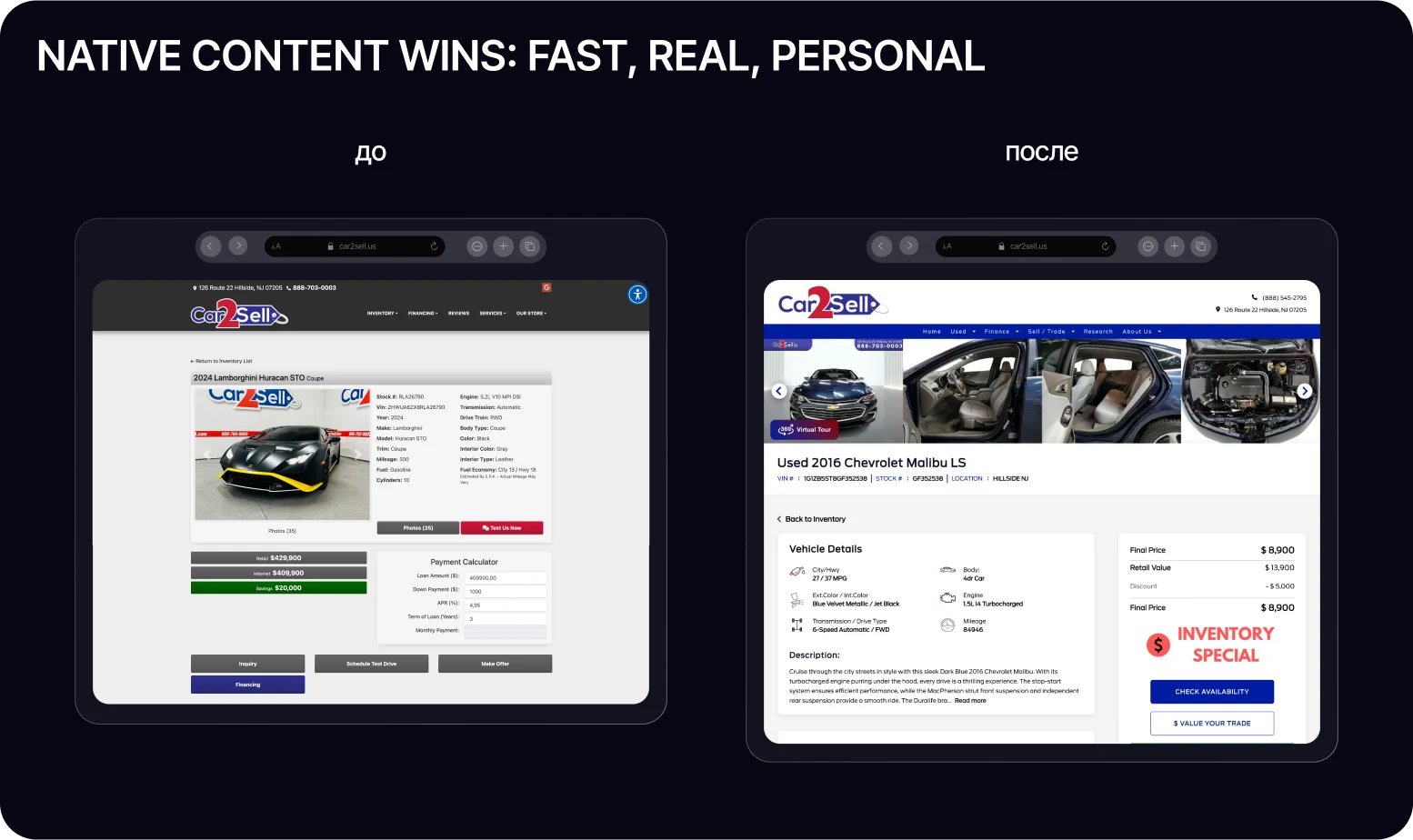
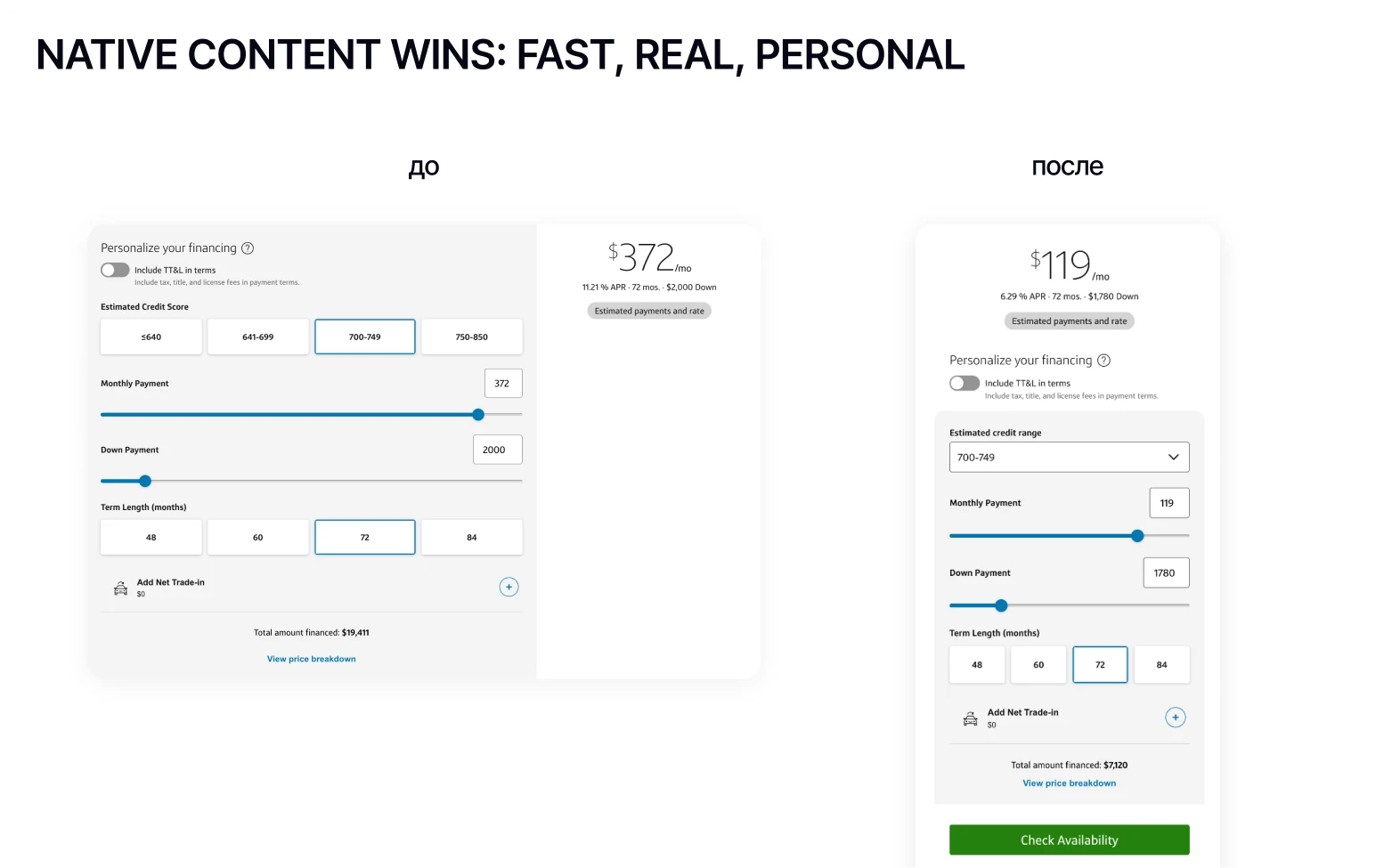
Heatmaps and behavior data revealed where the old website lost attention and where its navigation created friction. We rebuilt the information architecture around awareness, interest, consideration and action.
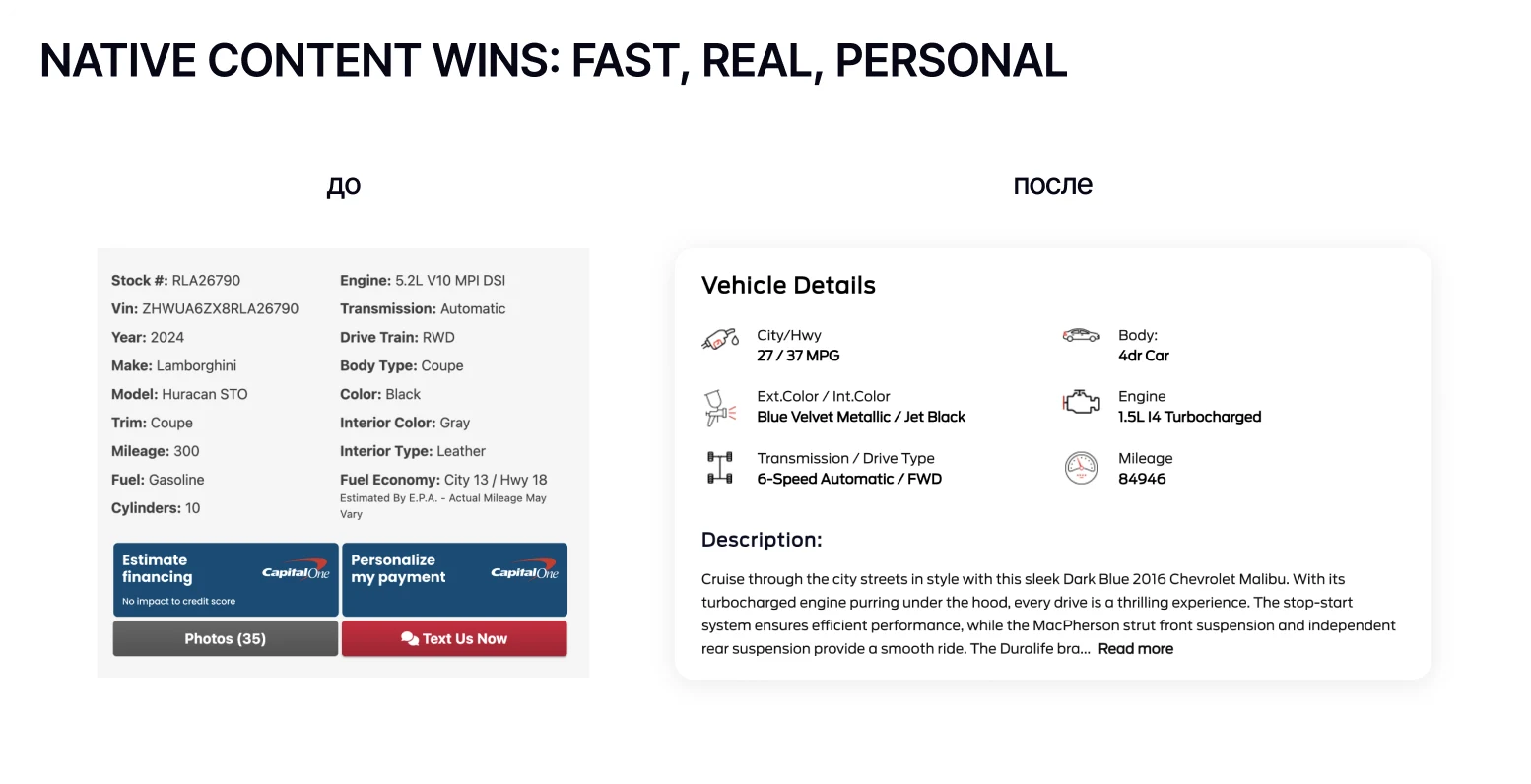
The redesigned website combined an inventory with make-and-model filters, financing information, a loan calculator, reviews and targeted landing pages. Vehicle pages and application flows became clearer, with fewer unnecessary steps.
The website became a central sales tool instead of a secondary brochure behind third-party platforms.
The website follows buying logic
The structure moves from first contact to inquiry without unnecessary detours.
- 01AwarenessHomepage and brand
- 02InterestInventory and trade-in
- 03ConsiderationFinancing and reviews
- 04ActionApplication and test-drive booking
Content and social channels
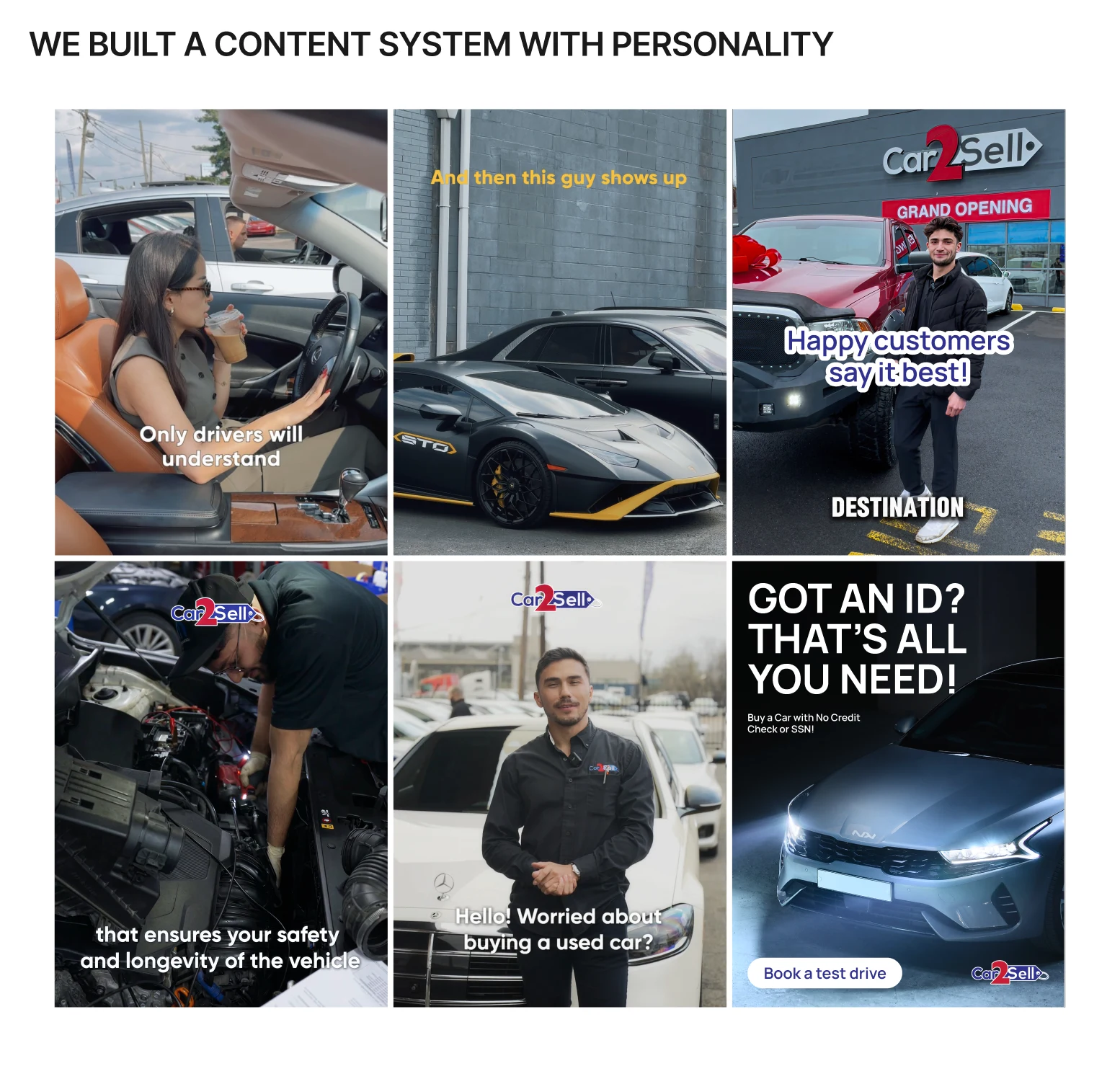
We established a visual identity and a consistent publishing rhythm. Buyer interviews, vehicle reviews, real offers, quizzes and behind-the-scenes stories made the dealership more recognizable locally.
Instagram, Facebook and Facebook Marketplace each had a role. The content supported trust and familiarity alongside direct-response advertising.
The advertising funnel
Search and Performance Max captured purchase intent. Meta, Reels and TikTok introduced the brand and developed interest. Remarketing, email and CRM supported return visits and follow-up.
Offers, website content and later messages were coordinated across those stages. The aim was a coherent customer journey, not a set of isolated campaigns.
Channels work together
One offer, connected landing pages and shared measurement.
Omnichannel funnel
Each channel has a specific job instead of duplicating the others.
AwarenessMeta · TikTok · Reels
ConsiderationGoogle Search · Landing pages
ConversionCRM · Email · Remarketing
Google Ads: capturing active demand
Search campaigns were segmented by brand, vehicle model, financing conditions, New Jersey locations and needs such as trade-in. Examples included “no SSN car loan” and “used cars NJ”. Campaigns were continually optimized against cost per lead; Search accounted for more than 60% of inquiries.
Performance Max extended reach using real cars, interiors and buyer imagery. Offers around a one-day purchase and financing without an SSN supported the campaign strategy.
The original 2023–2024 reporting shows seven times as many Google Ads leads, at an average cost of $21 per lead.
Google Ads
Published comparison for 2023 and 2024.
- 7×
- more leads year over year
- $21
- average cost per lead
Meta Ads: creative and engagement
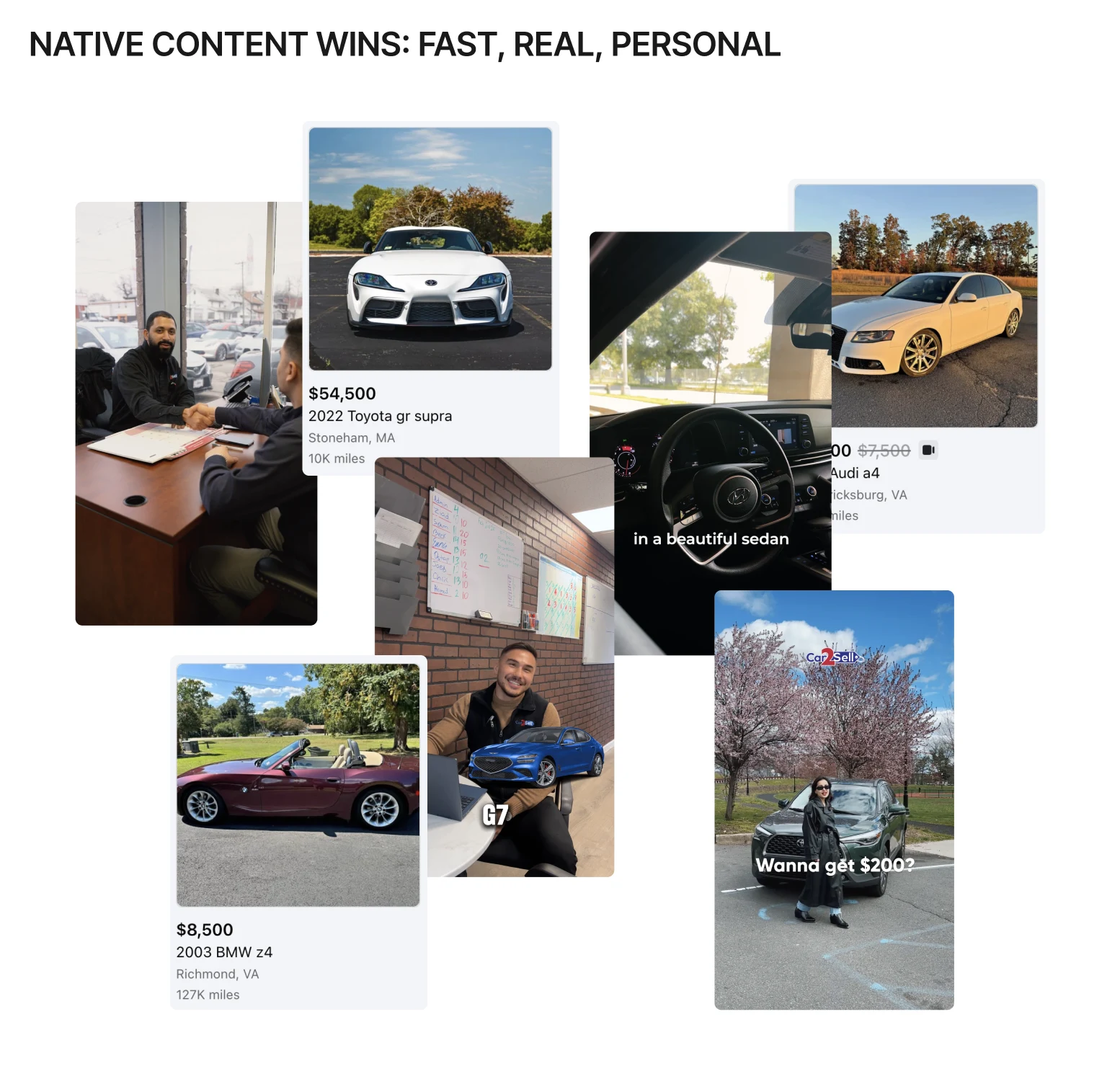
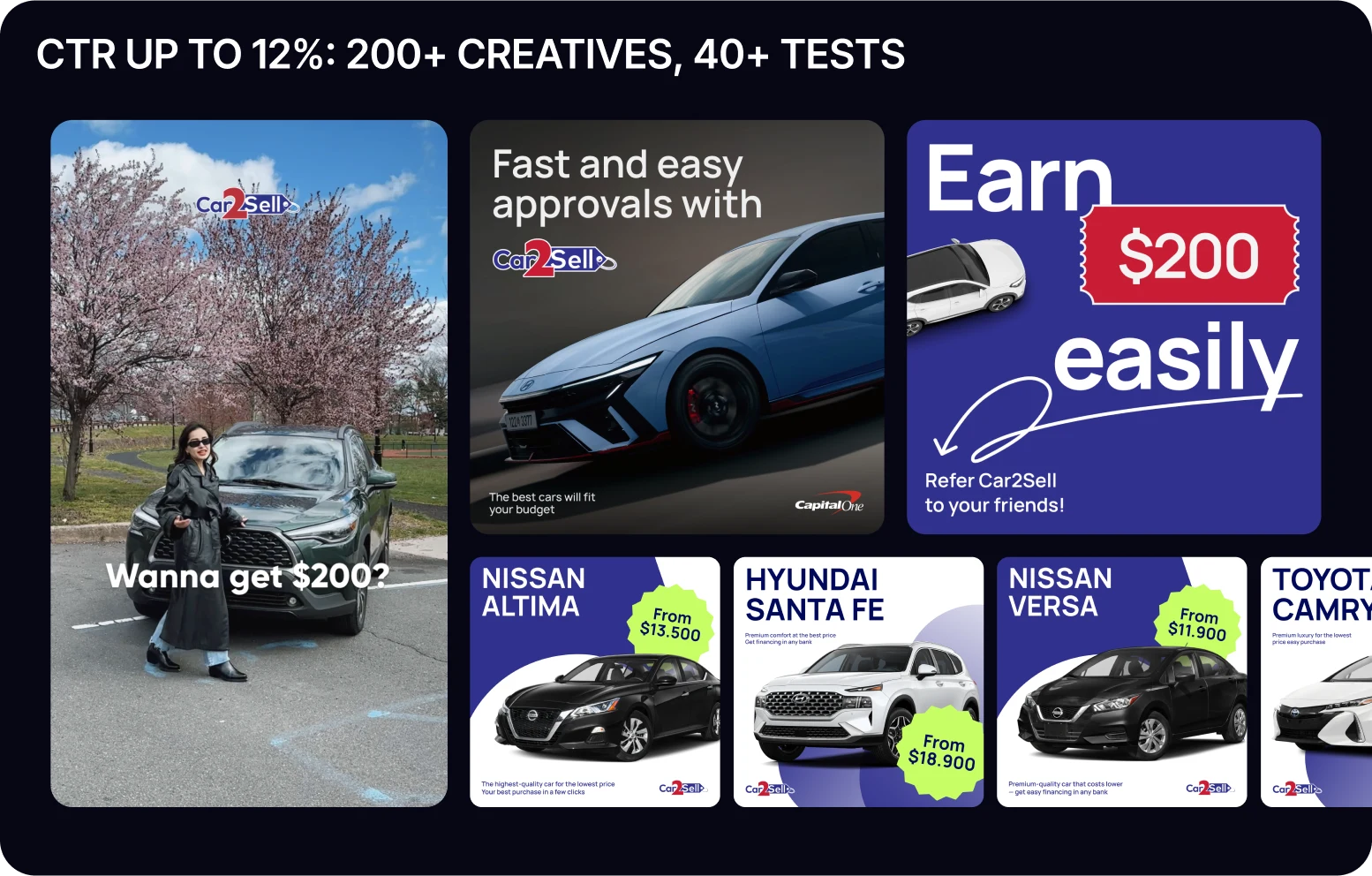
Instead of relying only on polished vehicle photos, we tested handover videos, short explainers, customer content, Marketplace ads and time-sensitive offers.
More than 200 creatives were tested across 40 hypotheses. Individual audience segments reached 10–12% CTR. Facebook Ads leads increased 3.2 times in 2024 versus 2023, at an average $33 per lead.
Meta Ads
- 3.2×
- more leads year over year
- $33
- average cost per lead
- 200+
- creatives tested
- 40+
- hypotheses tested
SEO: structure and search visibility
A technical audit and performance improvements were followed by more than 40 pages covering vehicle brands, financing conditions, reviews and locations. Keyword clusters, internal links and external links supported the new structure.
Search visibility grew 5.4 times between September 2023 and November 2024. The original traffic chart is reproduced below with its own reporting labels.
Search visibility
- 5.4×
- growth from September 2023 to November 2024
Organic traffic
- +311%
- growth during the published period
Email and referral marketing
The email program began with segmentation and automated welcome messages. Follow-up explained available cars and financing, while reactivation offers addressed people who had inquired but not purchased.
A $300 referral offer brought more than 70 purchases in its first year. Customers who had already bought, recent visitors and unconverted leads received different messages.
Email contributed 7–15% of monthly inquiries. The reported average open rate was 47%, with a 7% click-through rate and nearly 100 purchases over a year.
Follow-up after the inquiry
Different paths for new leads, unconverted inquiries and existing customers.
- 01Welcome
- 02Trade-in follow-up
- 03Reactivation
- 04Referral program$300
Email marketing
- 47%
- average open rate
- 7%
- average click-through rate
- ≈100
- purchases in one year
Native content and an authentic audience
Employees and customers appeared in short stories such as getting a car in one day or buying without an SSN. Strong content was amplified through Instagram and TikTok advertising.
Earlier follower-acquisition tactics had left the social accounts with an unengaged audience. We gradually removed clearly irrelevant accounts while increasing genuine customer stories and behind-the-scenes content.
This made the audience and reporting more useful. Original social charts below preserve the source reporting period and labels.
Authentic audience
- +145%
- follower growth in nine months
Engagement
- +43%
- growth in nine months
Results
The dealership gained a connected system for acquiring customers directly: a stronger website, relevant offers, advertising, SEO, follow-up and social proof.
The published case reports 400–500 monthly leads at an average $27 per lead, 420% marketing ROI and 70% annual growth in digital-channel revenue. The referral program later passed 100 purchases. Channel-specific periods are shown on the original graphics.
The system after the engagement
Channels are connected by shared logic, measurement and one customer journey.
Google AdsSegmented by demand and vehicle model
Meta AdsWinning combinations scaled
Display advertisingReach campaigns launched
SEO40+ new landing pages
Mobile experienceSimplified and optimized
Social channelsReels, Shorts and TikTok run as a system
EmailWelcome, follow-up and reactivation launched
Reviews4.7 / 5
System results
- 420%
- marketing ROI
- +70%
- digital-channel revenue
- 400–500
- monthly leads
- $27
- average cost per lead
- 100+
- referral purchases
This case covers different project stages. Reporting periods are shown on the original graphics; percentages and multiples have not been recalculated from images.