Launch is the start of the operating period
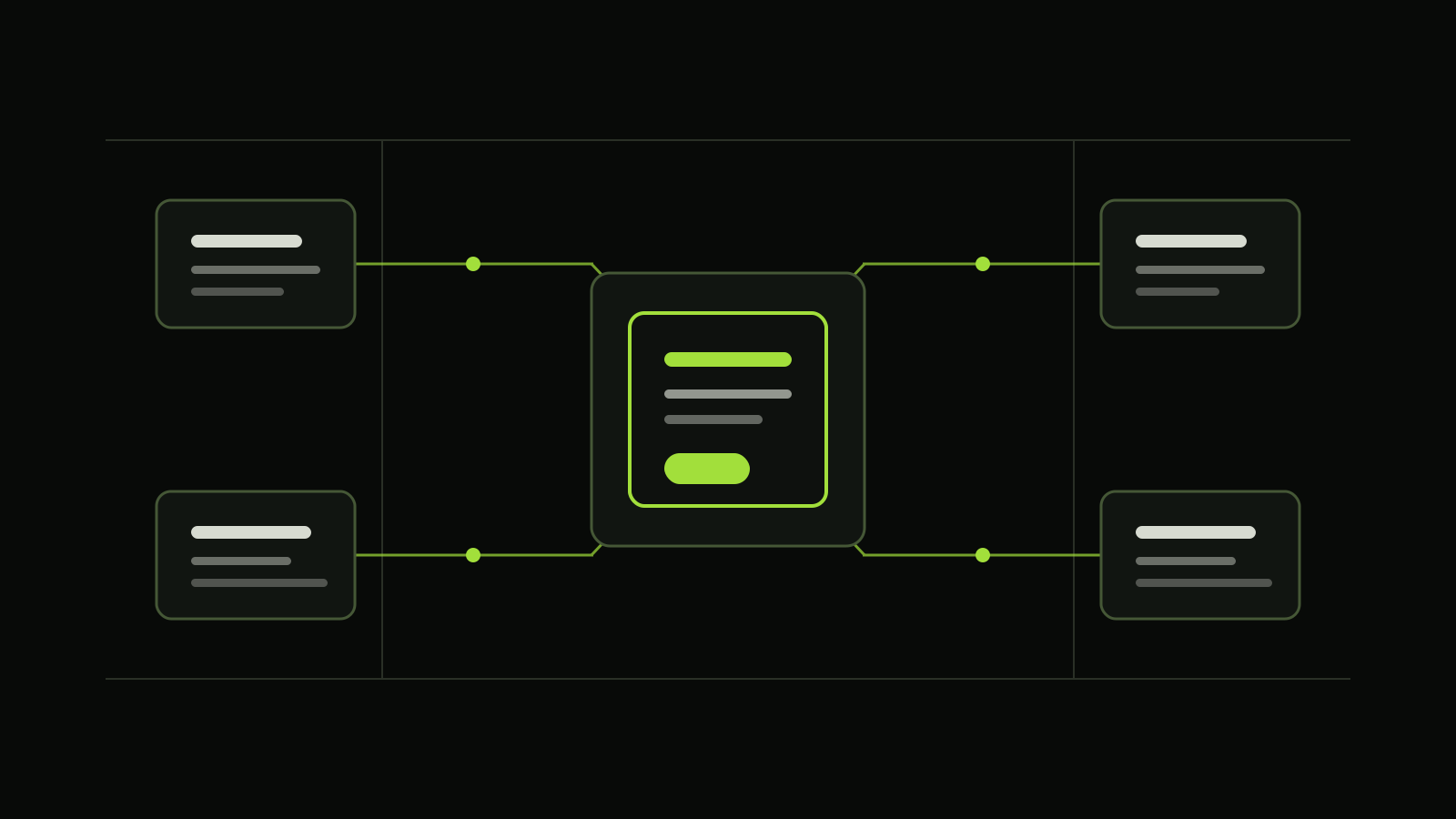
The first release is built from assumptions about users, demand and operations. After launch, real search queries, campaign behavior, sales feedback and support requests reveal what the website must do next.
A fixed set of pages turns every new service, location, language or experiment into a redesign. A product approach creates reusable templates, clear ownership and a release process that can absorb change.
- 01Release
Ship a clear customer path and measurement plan.
- 02Observe
Collect behavior, search and sales evidence.
- 03Prioritize
Choose the change with the highest business value.
- 04Improve
Update the system without rebuilding the whole site.
Design the information architecture before decorating pages
Services, locations, industries, products, articles and case studies should form an understandable model. Search engines need distinct destinations for distinct intent; customers need a short path between explanation, proof and action.
| Area | Decision |
|---|---|
| URLs | Stable patterns for services, locations, cases and articles |
| Templates | Reusable structures with controlled variation |
| Content model | Fields that separate meaning from page decoration |
| Internal links | Clear relationships between commercial and supporting pages |
| Localization | Equivalent routes, metadata and language ownership |
Build analytics and operations into the product
Forms, calls, CRM records, consent and campaign parameters belong to the website system. Adding them after the visual build often produces duplicate events, lost attribution and handoffs nobody owns.
- Define primary and diagnostic events before development.
- Preserve source and customer context through the form.
- Test delivery, error states and spam protection.
- Connect qualified outcomes back to reporting.
- Assign an owner for releases, content and technical health.
Maintain a small evidence-based roadmap
A useful roadmap combines business priorities, customer friction, search opportunity, technical risk and the effort required. It does not need to become a software-product bureaucracy.
This approach makes the site a compounding asset. Each release improves the system that supports future campaigns, content and markets.